
Taking a Bit of Venice Home
Shadows, slow looking and a few things I’m still thinking about after the Venice Biennale
I’ve just come back from the Venice Biennale, with a sneaky week in London thrown in too, and I’m still thinking about it. Actually, I think I’ll be thinking about this trip for years to come.
There is something about travel that makes everything feel slower and more alive. Even the less enjoyable bits. The trains, the planes, finding your way around in a heatwave, getting lost. Somehow, it all becomes part of the experience.
For those who don’t know it, the Venice Biennale happens every two years and takes over the whole city. Exhibitions are everywhere. You could spend six months there and still not see everything, so a week is really just a taster.
I’m not enough of an art critic to give you a considered take on the whole thing, but if you’re interested, you can read more about this year’s Biennale here.
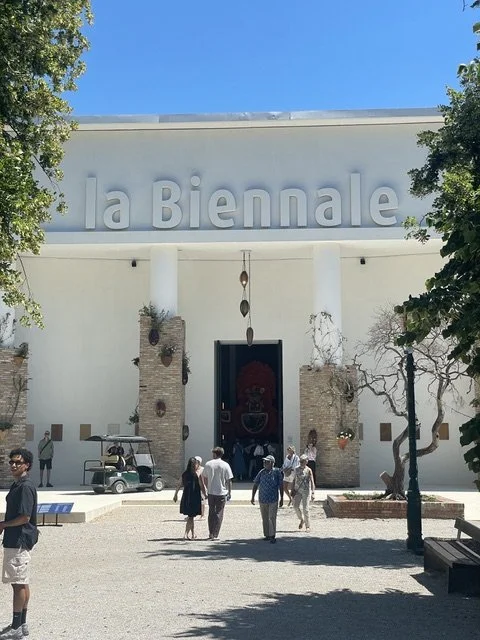
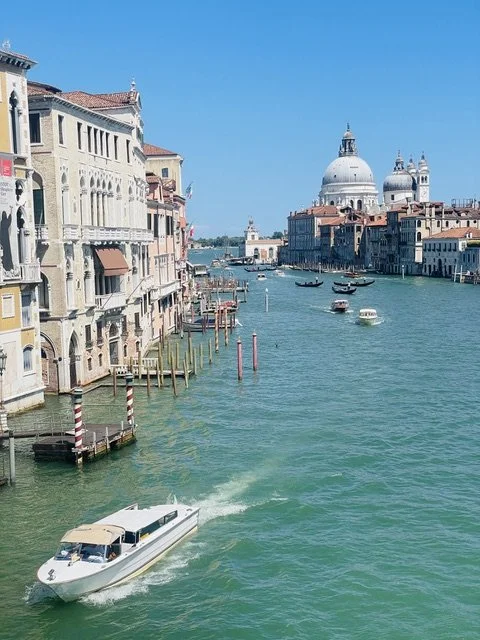
This year’s theme is In Minor Keys, which is about listening to the quieter signals of life and the earth, and paying attention to the things that can easily get lost in all the noise.
I started in the bookshop, to buy the Biennale guide. Mandatory for such an event.
The cover is simple: a photograph of shadows. It felt quite serendipitous because I’ve been noticing shadows everywhere lately.
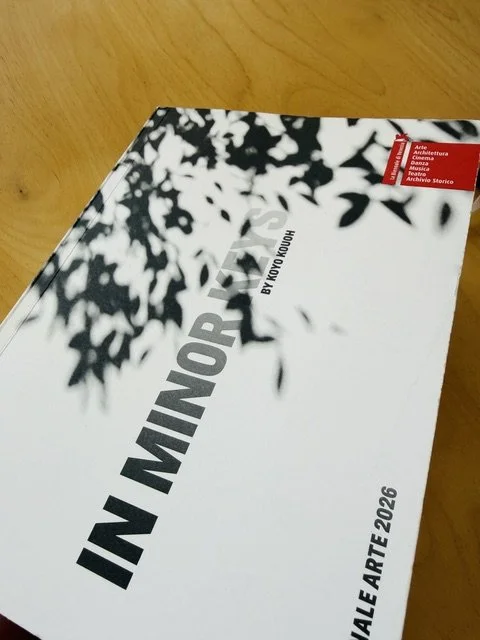
Maybe because I’ve been thinking about them in my own work. Shadows have always interested me, but lately I’ve been thinking more about what they say about time and space. They are almost a reflection of the object, but not quite. Softer, fuzzier, constantly changing depending on the light and the time of day.
And that’s very much where my own work has been heading lately too. I’ve become increasingly interested in shadows and the relationship between an object and what’s not quite there.
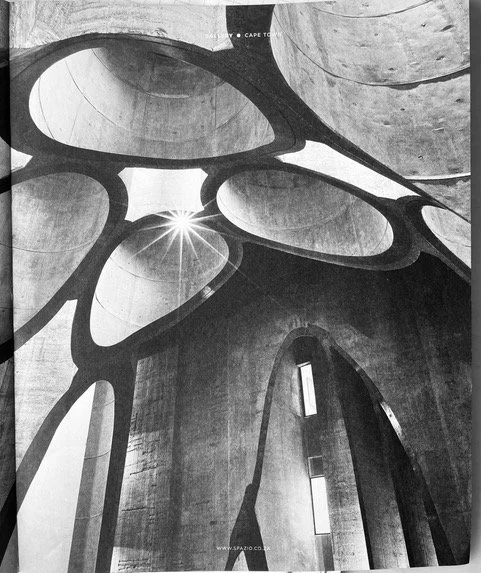
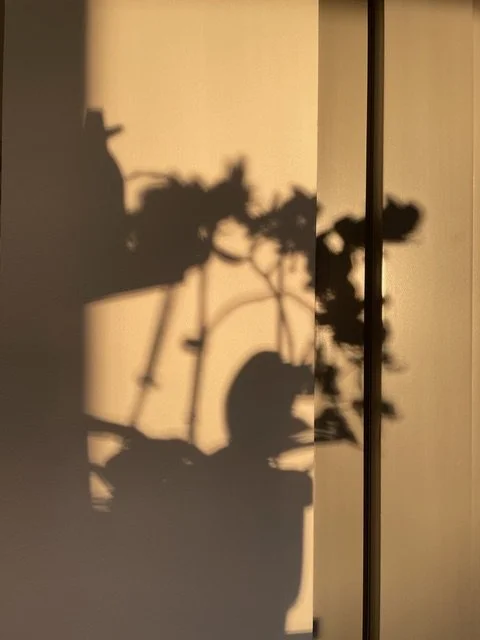
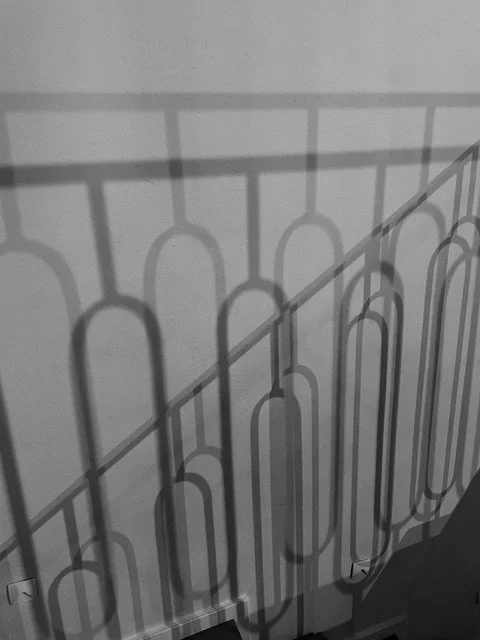
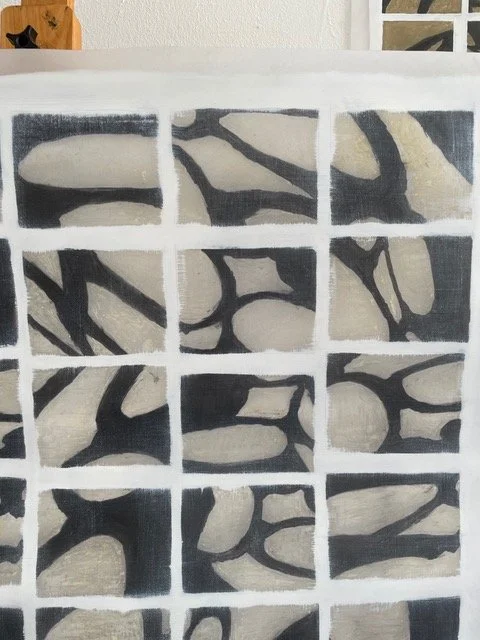
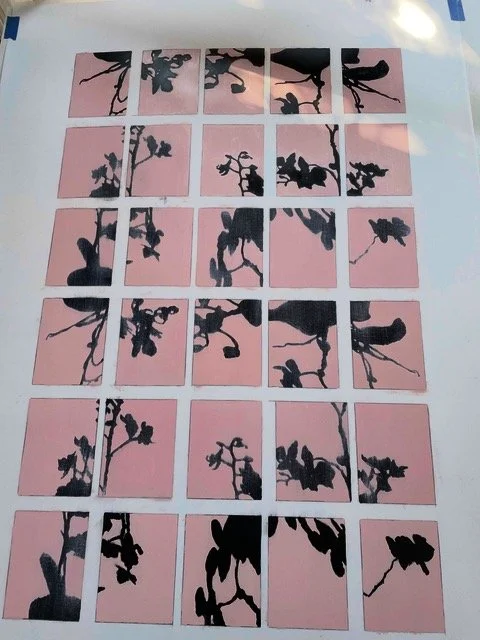
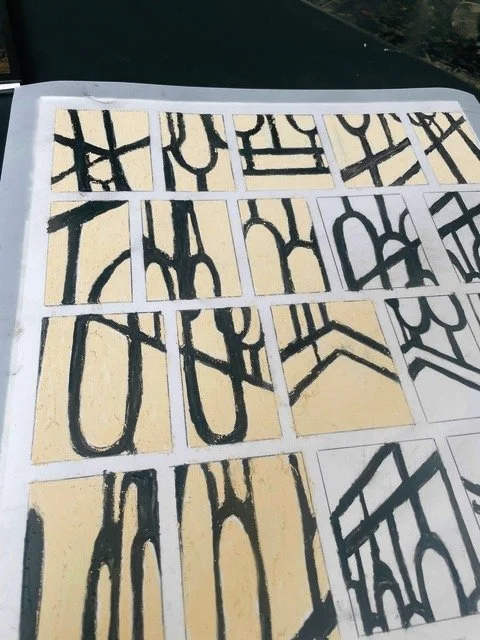
So here are a few of the works where I found myself particularly noticing that relationship between the object, the light and the shadow.
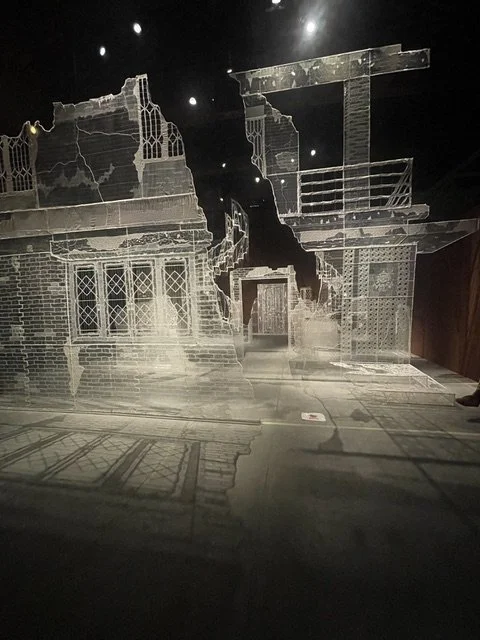
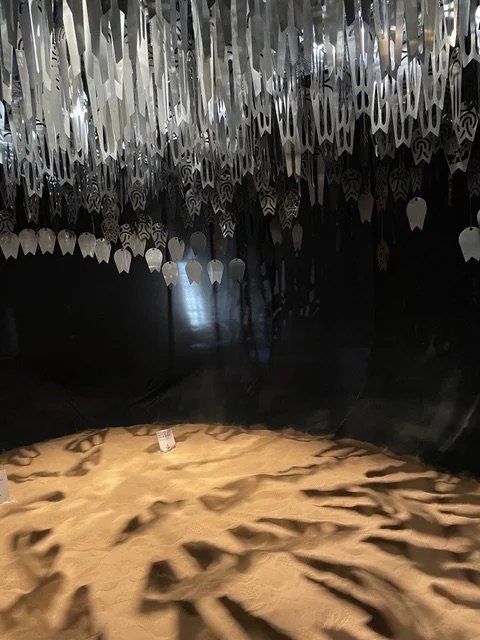
Left to right:
Sumakshi Singh, Permanent Address, 2026
India Pavilion, Arsenale
This is a life-size reconstruction of Singh’s demolished family home in New Delhi, made entirely from delicate embroidered thread. The structure is almost ghost-like. You can see through it and experience the space as both a house and a memory of a house.
What stayed with me was how the gaps and shadows become almost as important as the house itself. It’s a physical structure, but it also feels like something that has disappeared.
Haitham Al Busafi, Zīnah, 2026
Oman National Pavilion
The installation uses traditional Omani horse ornaments, al-zaanah, suspended above a floor of sand from Oman. As the ornaments move, the light catches them and creates constantly changing shadows across the sand.
I loved the idea of something so physical and ornamental becoming something much more fleeting through light and movement.
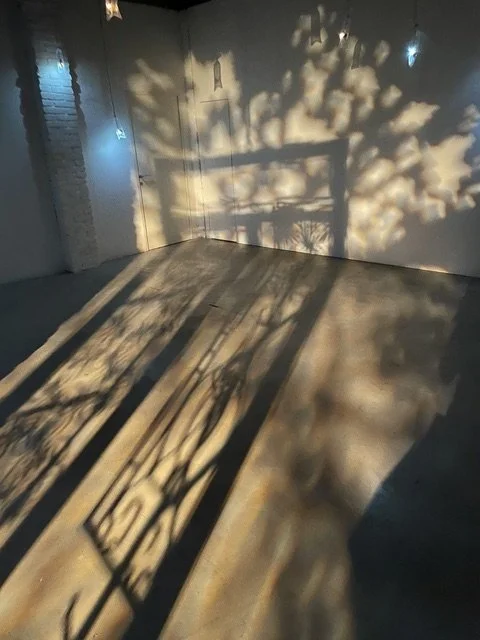
Angel Hui, I Would Like to Open a Window for You, 2026
Fermata: Hong Kong
The work incorporates handcrafted metal window grilles made with Hong Kong and Venetian metalworkers. Natural light passes through the grilles and creates shifting shadows across the walls of the historic Venetian building.
There was something very simple about it, but I found myself watching what the light was doing to the space as much as I was looking at the grilles themselves.
Left to right:
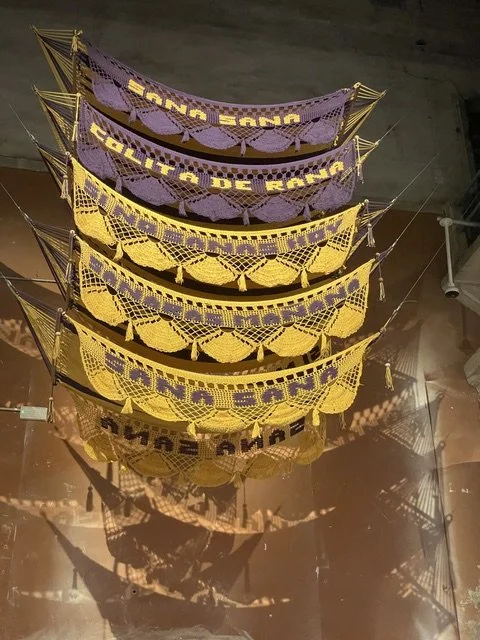
Guadalupe Maravilla, Disease Throwers, 2026
Main Exhibition, Arsenale
Maravilla’s work explores migration, trauma, illness and healing, drawing heavily on his own experience of migrating to the US as a child and his later experience with cancer.
The hammocks aren’t just beautiful textile objects. They cast huge, shifting shadows across the wall and floor, completely changing the feeling of the installation.
Again, I found myself looking at what the objects were doing to the space around them as much as the objects themselves.
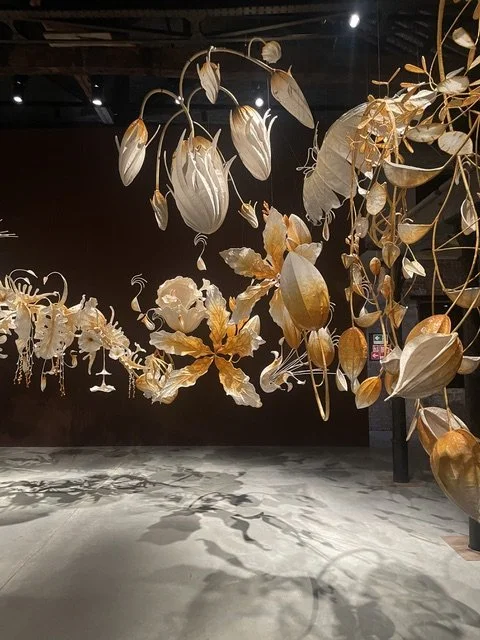
Ranjani Shettar, Under the Same Sky, 2026
India Pavilion, Arsenale
Shettar’s installation consists of delicate suspended forms inspired by flowers and natural growth. They are handmade using traditional processes and create an almost weightless garden that you move through.
Something physical becomes almost ephemeral through light, shadow and space.
This was one of the works I kept coming back to in my head.
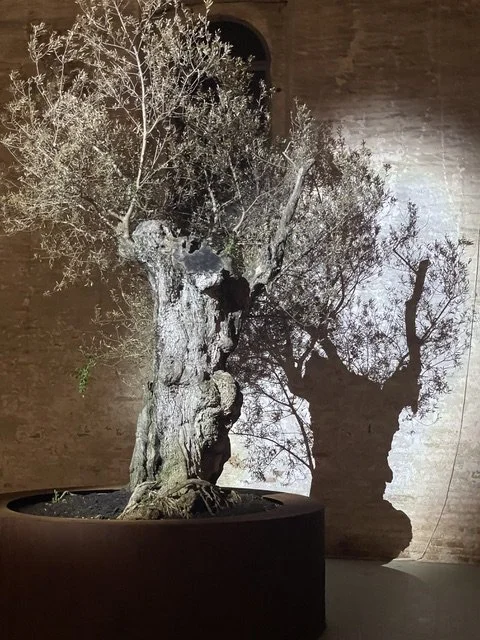
Theo Eshetu, Garden of the Broken Hearted, 2026
Main Exhibition, Arsenale
The installation uses a large olive tree on a rotating platform, with video projected onto the tree. The projected imagery, the physical tree and the light create constantly shifting shadows.
What interested me was how the shadow almost becomes part of the work itself. The tree is physically there, but the projected image, light and movement continually alter how you experience it.
That idea of the object being there, but also not quite being there, feels very close to what I’ve been thinking about in my own work.
The one thing that really stayed with me from the Biennale was that even in a world that feels increasingly chaotic, people keep making things. Art continues. Music continues. Poetry continues. I found that quite reassuring.
Coming home, I’ve been trying to get back into my usual rhythm and mostly failing. There’s a lot of catching up to do, and my creative brain definitely hasn’t caught up with my inbox yet.
But I’m taking a bit of Venice home with me.
Slowing down where I can. Looking a little longer. Paying attention to the things I might normally miss.
And let’s see how that translates into my own work.
Until next time,
Nicola
Nicola Bouwer is a Johannesburg-based South African artist working in hand-cut analogue collage and oil painting.